Guide
What hijab colour suits me?
The short answer: your hijab is the piece closest to your face, so choose its colour by your skin undertone. With a warm undertone, cream, camel, mustard, terracotta and olive brighten your face; with a cool undertone, navy, light grey, blush, plum and purple do. A neutral undertone suits soft shades from both sides, and if you're unsure, teal is among the colours that suit all four colour seasons. Then look at your contrast: if your brows and eyes are much darker than your skin, pick clear, deep colours; if they're close, pick soft shades.
Last updated:
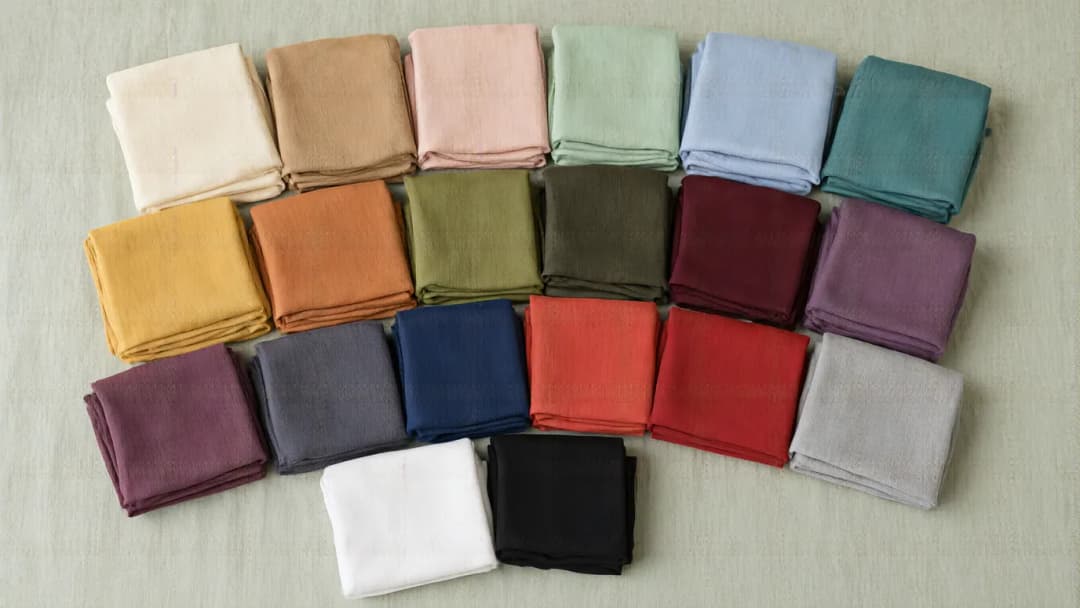
Find your undertone at home
Look at your wrist
In daylight, look at the veins on the inside of your wrist. If they look greenish, your undertone is most likely warm; if they look blue or purple, cool. If you see both, neutral.
Compare white and cream
Hold a bright white cloth under your face, then a cream one. If your face looks brighter against the white, your undertone is cool; if it looks livelier against the cream, warm.
Gold or silver?
If gold jewellery brings your skin to life, your undertone is warm; if silver looks better, cool. If both look the same, neutral.
Try these without make-up and in daylight; yellow lamplight makes skin look warmer than it is. If the three tests disagree, your undertone is most likely neutral.
Look at your contrast
Undertone tells you whether a colour should be warm or cool; contrast tells you how deep and clear it should be. If there's a big difference between your brows, eyes and skin (dark brows and eyes, light skin), you have high contrast, and clear colours such as black, white, navy and red frame your face.
If the difference is small, soft shades such as light grey, blush and camel look better, and a very dark hijab can make your face look harsh. Because the hijab covers your hair, it's the largest area of colour around your face, so that's where undertone and contrast show most.
Hijab colours by undertone
Colour analysis groups undertone and contrast into four colour seasons: Spring and Autumn for warm undertones, Summer and Winter for cool ones. The colours below were chosen for hijabs from the season tables Glassrobe's morning outfit uses.
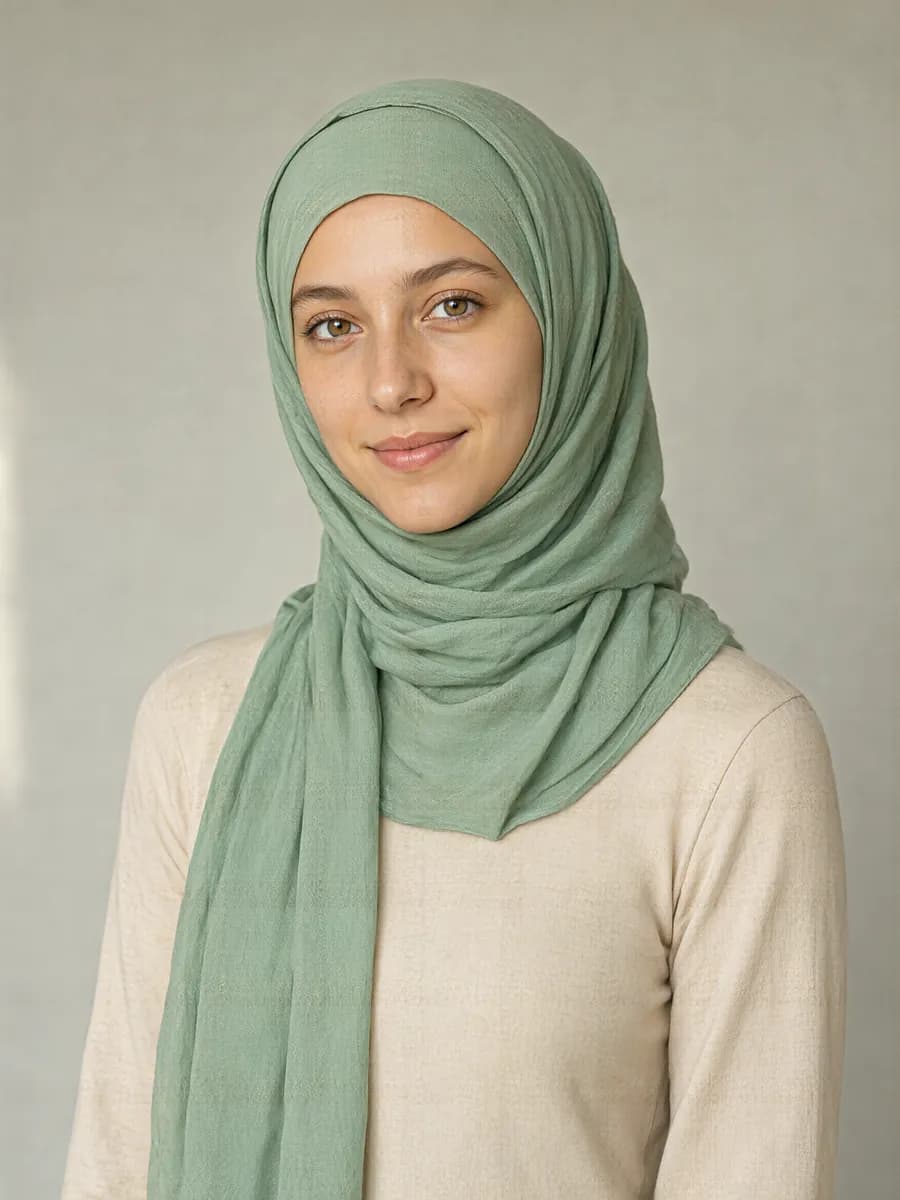
Spring
Warm undertone, light and clear colours
Good hijab colours
- cream
- camel
- blush
- mint
- light blue
- teal
Hijab colours to avoid
- plum
- burgundy
- purple
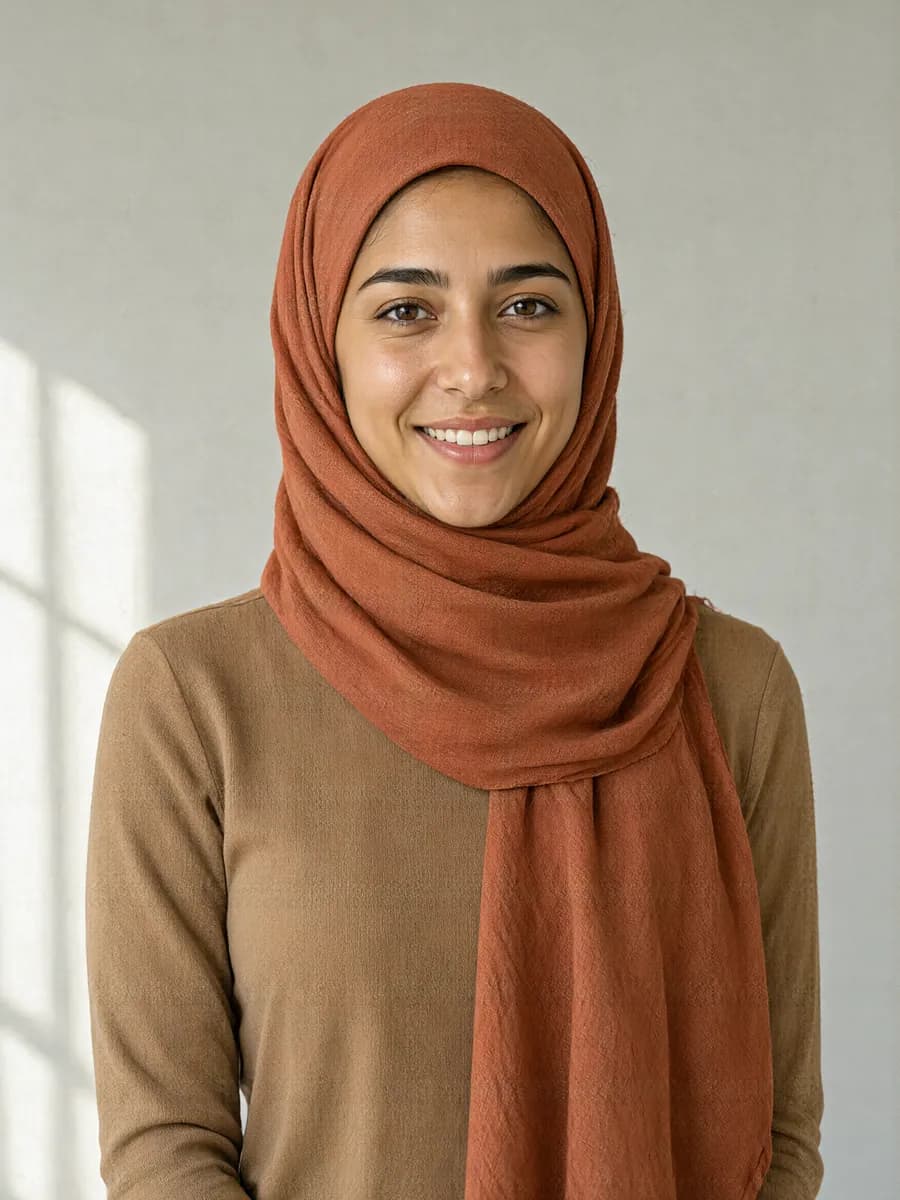
Autumn
Warm undertone, deep and muted colours
Good hijab colours
- camel
- brown
- mustard
- terracotta
- olive
- burgundy
Hijab colours to avoid
- pink
- purple
- mint
- light blue
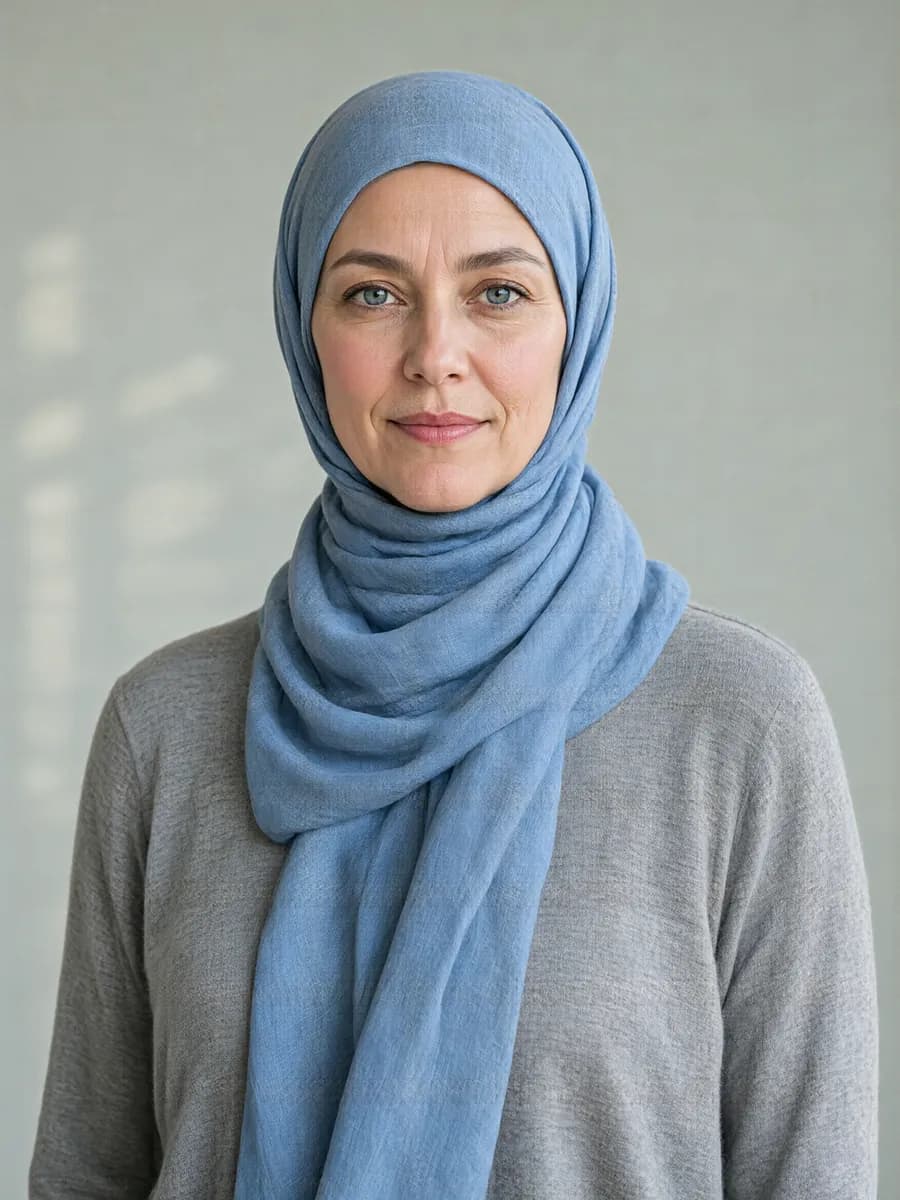
Summer
Cool undertone, light and soft colours
Good hijab colours
- light grey
- light blue
- blush
- mint
- plum
- navy
Hijab colours to avoid
- orange
- mustard
- terracotta
- yellow
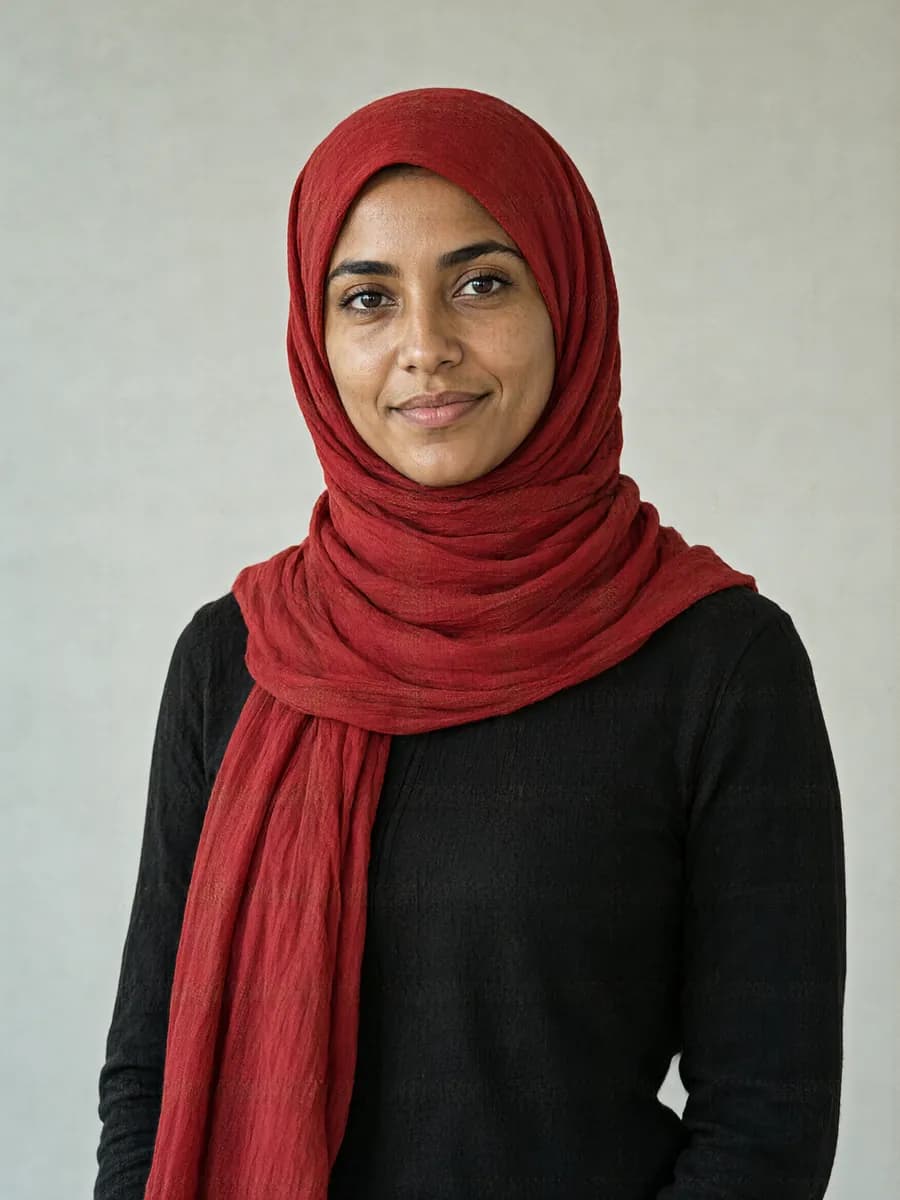
Winter
Cool undertone, deep and clear colours
Good hijab colours
- black
- white
- navy
- red
- burgundy
- plum
Hijab colours to avoid
- orange
- mustard
- olive
- camel
- beige
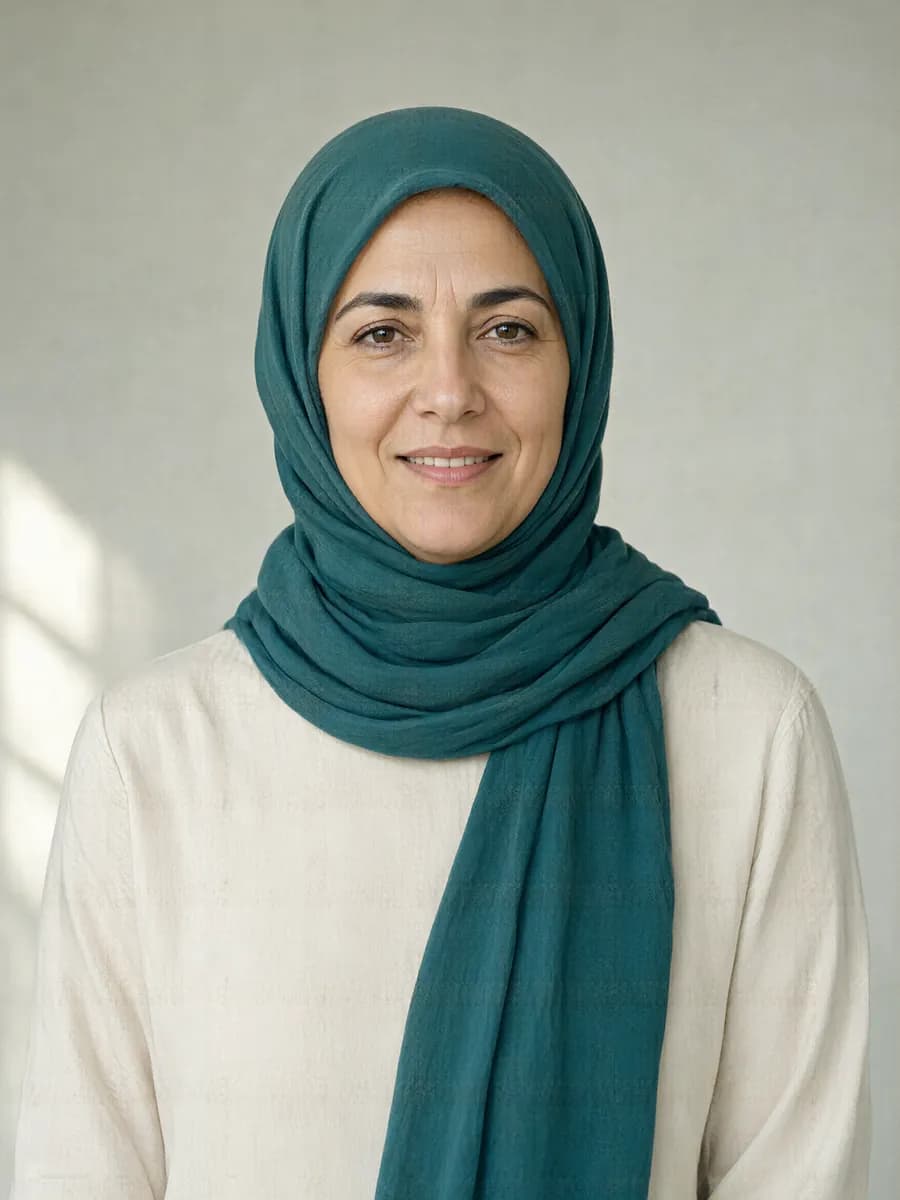
Neutral undertone
Between warm and cool: soft shades from both sides
Good hijab colours
- off-white
- blush
- teal
- green
If you're unsure, teal: it's on all four seasons' lists.
Matching your hijab to your outfit
Once you've chosen a colour for your face, look at the outfit. In a neutral outfit of black, navy, beige or grey, the hijab can be the one colour accent: a burgundy hijab looks good with a navy trench coat.
If the outfit already has a bright colour, pick a neutral hijab or a lighter or darker shade of the same colour. Two bright colours side by side compete with each other.
All the colour and pattern rulesPatterned hijabs
With a patterned hijab, look at the background colour and the colour that falls next to your face; both should be colours that suit you. If your outfit has a patterned piece, choose a plain hijab or repeat one of the print's colours: a floral dress goes well with a plain hijab in the pink of its flowers.
Doing this with your own wardrobe
Glassrobe's selfie colour analysis (Plus) looks at your skin, hair and eye colours and the lines of your face in a filter-free selfie taken in daylight. It tells you your colour season, undertone and contrast, up to 8 colours that suit you and up to 6 to avoid. The selfie isn't stored, only the results are saved, and the analysis asks for your explicit consent first.
The results feed the morning outfit too: colours that suit you get a small plus on tops, dresses and outer layers, and colours that wash you out get a small minus. The morning outfit doesn't pick hijabs or accessories; you choose your hijab colour from the analysis list.
If your head is covered in your full-length photo, you can add one of the headscarves in your wardrobe to an outfit in the virtual try-on. The try-on ties it the way it's tied in your photo and changes only the fabric and colour, so you can see the same outfit with different hijab colours on your own photo. Detecting the headscarf also asks for your explicit consent in the app.
Frequently asked questions
How do I know which hijab colour suits me?
First find your undertone: in daylight, hold a white and a cream cloth under your face and look at the veins on your wrist. Earthy, warm shades suit a warm undertone; blues, greys and purplish shades suit a cool one. Then choose how deep the colour should be by your contrast.
Which hijab colours suit dark or fair skin?
Skin tone doesn't tell you the undertone: dark and fair skin can both have a warm, cool or neutral undertone. Mustard, terracotta, camel and olive suit a warm undertone; navy, plum, light grey and blush suit a cool one.
Does a black hijab suit everyone?
Black suits high-contrast faces most, that is Winter. If the difference between your brows and your skin is small, black can make your face look harsh; navy, charcoal or brown do the same job more softly.
Should I match my hijab to my outfit or to my face?
Both. Choose the colour by your face, then match it to the outfit: in a neutral outfit the hijab can be the accent; in a colourful one, choose a neutral hijab or a shade of the same colour.
The pictures on this page were generated with AI; the people in them are not real.